
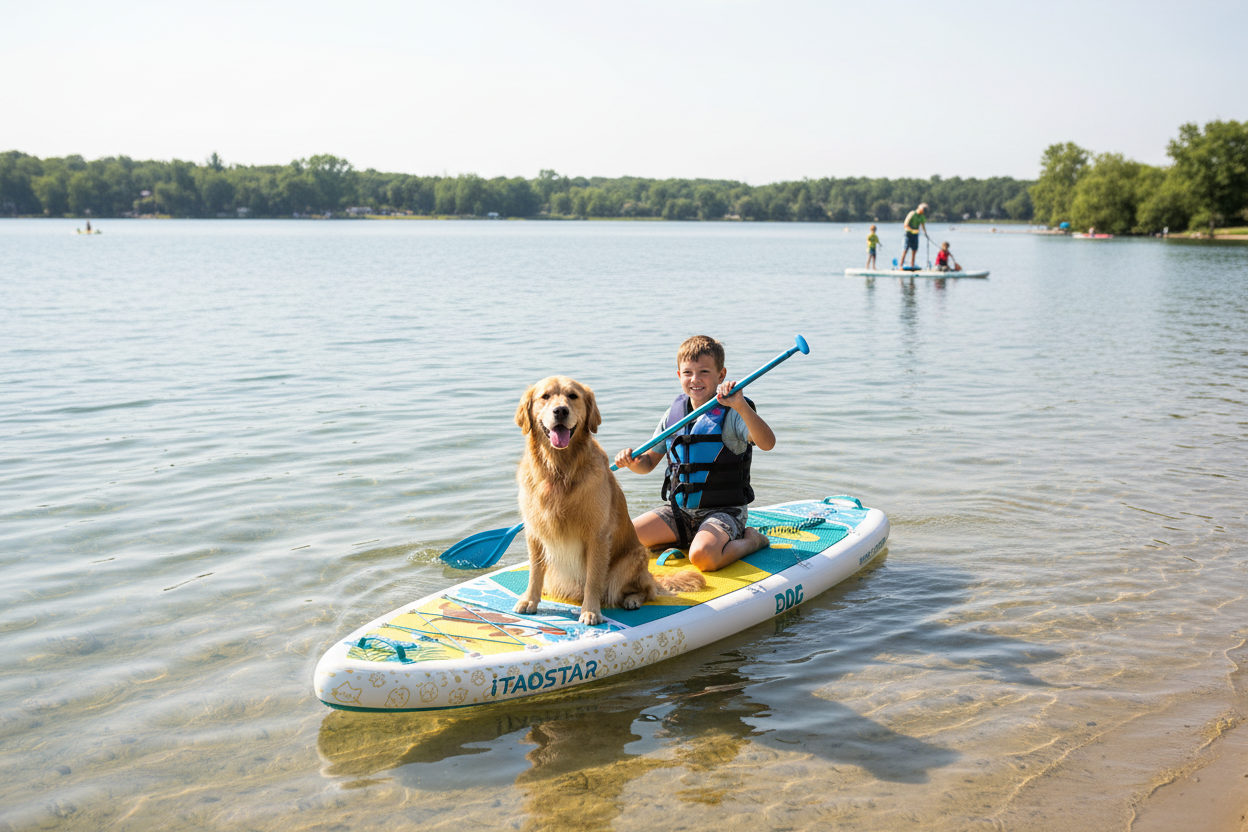
When you’re choosing between a soft top SUP vs inflatable for kids, the main question is not speed or performance—it’s safety, comfort, and how easy it is for children to learn balance on the water. Both board types are beginner-friendly, but they feel very different in real use. Soft top boards are usually foam-covered rigid boards, while inflatable SUPs are air-filled and portable. Each has advantages depending on where your child will paddle, how often you travel, and whether you want a family-friendly setup for lakes, beaches, or calm rivers. This quick guide breaks it down in a simple, practical way so parents can choose confidently without overthinking technical specs.
Soft Top SUP vs Inflatable SUP: Key Differences for Kids
Soft Top SUP: Stable Feel with Foam Protection
A soft top SUP usually has a foam deck over a hard EPS foam core. This makes the surface softer if a child falls, which is why they are often used in surf schools.
Key traits:
- Very stable in small waves or surf zones
- Soft surface reduces impact during falls
- Heavier and harder to transport
- Best for fixed locations (surf schools, beach clubs)
Soft tops feel solid underfoot, but they are less practical for travel or families who want portability.
Inflatable SUP: Portable and Beginner-Friendly
Inflatable SUP boards use PVC construction with drop-stitch technology. When inflated, they become firm and stable, but when deflated, they fit into a backpack.
Key traits:
- Lightweight and easy to carry
- Very safe (soft edges, no hard impact zones)
- Ideal for lakes, calm rivers, and travel use
- Easy storage for families
For most parents, inflatable SUPs are the more convenient option for weekend trips or holiday use.
Safety Comparison in Real Use
For kids, both options can be safe, but the environment matters more than the board:
- Calm lake → inflatable SUP is ideal
- Beach surf school → soft top SUP is common
- Family travel → inflatable SUP is easier
- Frequent transport → inflatable wins clearly
Which SUP Is Better for Kids in Real Scenarios?
Learning Balance on Flatwater
For beginners, flatwater like lakes or slow rivers is the safest learning environment. Inflatable SUPs are often preferred because they are wide, stable, and forgiving when kids shift their weight.
Soft tops also work, but they are less practical if you need to carry them long distances.
Beach and Small Wave Use
Soft top SUP boards are commonly used in surf schools because they stay stable in small waves and have a fixed structure that handles light surf better.
However, inflatable SUPs designed for beginners can also handle gentle coastal waters as long as conditions are calm.
Family Travel and Storage Convenience
If you’re traveling with kids, inflatable SUPs are significantly easier:
- Pack into a single bag
- Fit in car trunks or hotel rooms
- Inflate in minutes with a pump
Soft tops require roof racks or large storage space, which is less convenient for families on the move.
How to Choose the Right SUP for Kids Quickly
Focus on Stability First
Look for boards that are:
- Wide (around 30–34 inches)
- Thick enough for rigidity (inflatable models)
- Designed for beginners or all-around use
Stability matters more than board type for safety.
Consider Weight and Transport
If you will carry the board often, inflatable SUP is usually the better choice. Soft tops are heavier and less flexible for travel.
Think About Where You’ll Paddle Most
- Lakes and rivers → inflatable SUP
- Beach surf lessons → soft top SUP
- Mixed family travel → inflatable SUP
Matching the board to your environment is the most important decision.
Conclusion
In the soft top SUP vs inflatable for kids comparison, both are safe when used correctly, but they serve different lifestyles. Soft tops are great for surf-style learning in fixed locations, while inflatable SUPs are more practical, portable, and family-friendly for everyday water adventures. For most parents, an inflatable SUP offers the best balance of safety, convenience, and versatility.
Explore our kid-friendly inflatable SUP boards to find stable, easy-to-use options designed for safe and fun water experiences.
Share:
Adventure SUP Series: Boards Built for Real Water Exploration
iTAOSTAR Daisy SUP Review: A Stable Inflatable Paddle Board for Beginners and Everyday Adventures